




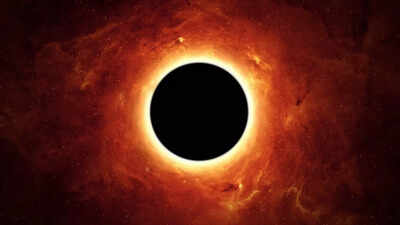
Solar eclipses have always drawn global interest, often inviting questions about how much light they actually block and whether they can darken the entire planet. As the world looks ahead to the total solar eclipse on 2 August 2027, curiosity around its impact continues to grow. This particular eclipse is expected to be one of the most widely viewed of the decade, with its path crossing parts of Africa, southern Europe and the Middle East. Yet most regions will see only a partial eclipse, while many areas will not notice any change at all. Understanding what will happen requires a clear explanation of how eclipses work, why their darkening effect is extremely localized and why no solar eclipse, including the one in 2027, can ever dim the whole world simultaneously.
Can a total solar eclipse darken the entire earth
A total solar eclipse occurs when the Moon moves directly between the Sun and the Earth, casting a sharply defined shadow known as the umbra onto the planet’s surface. Although the event sounds vast in scale, the umbra is remarkably narrow. It typically spans only a few dozen to a couple hundred kilometers in width, forming a curved line known as the path of totality. This means that only people standing within that narrow track experience complete darkness for a few minutes.Everywhere else on Earth receives only a partial shadow, or none at all, depending on how far they are from the alignment. In regions beyond the umbra, sunlight remains strong enough that the sky barely dims. Because the Earth is large and rotates continuously while the Moon’s shadow sweeps across it, the darkness produced by an eclipse never covers more than a tiny fraction of the planet at once. Even at its most dramatic moment, a total solar eclipse affects only a limited geographic corridor. This is why no eclipse in the past, and none in the future, will ever be able to plunge the whole globe into darkness simultaneously.
What the 2 August 2027 eclipse will look like across the world
Astronomy report published in BBC indicates that the path of totality for the 2027 eclipse will begin in the eastern Atlantic before moving across northern Africa, including Morocco, Algeria, Tunisia, Libya and Egypt, before continuing over parts of the Middle East and the Mediterranean. Cities like Luxor and Aswan in Egypt are expected to offer some of the longest durations of totality, making the event especially significant for observers in those regions.For people standing inside this path, the Sun will be completely obscured for several minutes. The sky will dim noticeably, temperatures may fall slightly and the Sun’s corona will glow faintly around the darkened disc. In neighboring regions just outside the path, the eclipse will appear partial. A portion of the Sun will seem “bitten” away, but broad daylight will still remain. Most of Europe, parts of western Asia and portions of eastern Africa will fall into this partial-visibility zone.Meanwhile, regions far from the eclipse track, including the Americas, Australia, most of Asia and much of the southern hemisphere, will not experience any eclipse-related change. For those areas, 2 August 2027 will be an ordinary day despite the global excitement surrounding the event. Differences in local cloud cover, humidity or air quality may further influence how striking or subtle the eclipse appears even within visible zones, meaning the experience will vary widely across locations.
What actually happens during totality
During totality, daylight briefly fades as though the world has slipped into an artificial sunset. Shadows sharpen, wind patterns may shift slightly and animals sometimes behave as if night has arrived early. Birds may quieten, insects may emerge and the environment takes on a muted, dreamlike tone. The most recognizable feature of totality is the sudden visibility of the solar corona, the Sun’s outer atmosphere, which forms a pale, delicate halo around the obscured disc.Observers often comment on the distinctive 360-degree horizon glow, where the distant sky remains bright while the area beneath the shadow becomes dark. This contrast creates a visually extraordinary moment that lasts only a short time before the returning sunlight overwhelms the shadow and restores normal daylight. Despite these dramatic visual changes, totality remains highly time-bound and location-specific. Even in the best viewing spots, the darkness persists for only a few minutes.
Why the 2027 eclipse will remain a localized event, not a global blackout
The 2027 eclipse highlights a key feature of solar eclipses: they are precise, geometric events, not global disruptions of sunlight. The Moon is far smaller than the Earth, so its shadow cannot cover more than a slim portion of the surface at once. As the shadow moves quickly, often thousands of kilometers per hour, the darkening effect is temporary and restricted to a small fraction of the world’s population.Most people on Earth will not experience totality, and many will not witness any portion of the eclipse at all. Even within the path of totality, the experience lasts only moments before daylight returns. These factors make it scientifically impossible for a solar eclipse to plunge the entire world into darkness. The 2027 event will offer a remarkable spectacle for those in its path, but it will remain a localized phenomenon rather than a global blackout.Also Read | What NASA’s second CHAPEA mission reveals about human survival beyond Earth
