



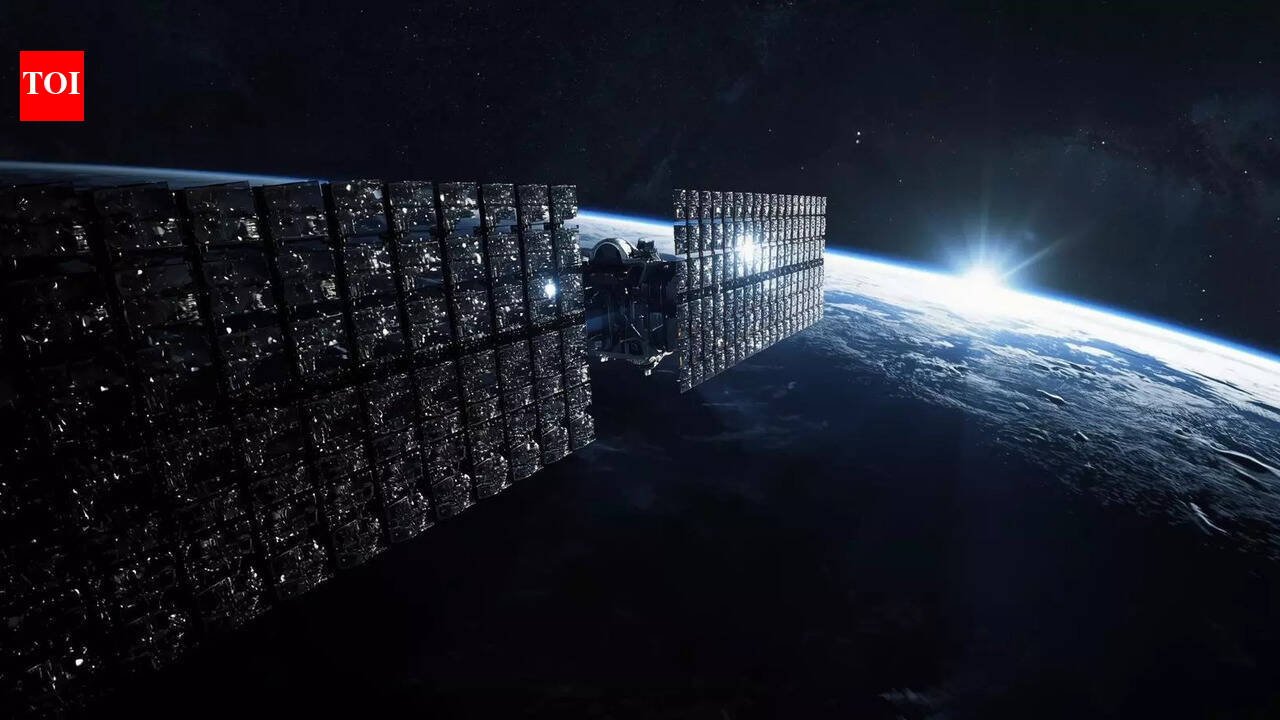
The idea sounds simple enough when reduced to its basics. Put reflective surfaces in orbit and redirect sunlight back to Earth after sunset. A California startup plans to test that idea with a small satellite launch. It is presented as a way to extend daylight, reduce energy use, and experiment with new forms of space-based infrastructure. Yet the proposal arrives at a time when Earth’s near space is already crowded and contested. Astronomers, environmental researchers and sleep scientists have begun to raise concerns. Their objections are not dramatic. They are practical. They focus on light, clutter, and what happens when darkness becomes harder to find. Although the mirrors appear small at first, the context they enter is significantly larger.
Night may never be dark again if this space mirror plan succeeds
A California startup wants to make night brighter by reflecting sunlight to Earth from space. The plan involves launching thousands of giant mirrors into low Earth orbit, a move that could dramatically alter how darkness looks from the ground.The company, Reflect Orbital, says its goal is to remove nighttime limits on solar power and critical infrastructure. Its first test satellite is scheduled for launch in April 2026. Even before that happened, the idea had already triggered concern among astronomers, environmental groups, and sleep researchers.Reflect Orbital’s The proposal centers on mirrors that are roughly 55 meters wide. Once in orbit, they would capture sunlight and redirect it toward specific locations on Earth after dark. The satellites would travel in a sun-synchronous orbit, staying close to the boundary between day and night so they can keep collecting sunlight even as the planet rotates below.If fully deployed, the system could involve up to 4,000 mirrors circling the planet.
How the space mirrors would work
Unlike a laser or spotlight, the mirrors would not produce a tightly focused beam. Sunlight is already spread across a wide area in space, and when reflected, it remains diffused. That means the light reaching the ground would be softer than direct sunlight but still bright enough to be noticeable.Reflect Orbital says this diffused glow could help solar farms generate power for longer periods or provide temporary lighting during emergencies and natural disasters. The company argues that controlled reflection could reduce reliance on fossil fuel backup systems at night.
Bright satellites already disrupt ground-based astronomy
The first Starlink satellites offered an early warning. Soon after launch, they were visible to the naked eye, leaving bright streaks across telescope images. These satellite trails can ruin observations entirely or add noise that weakens scientific data. Particularly vulnerable are wide-field observatories. Even with fewer satellites than currently proposed, a large share of images taken at twilight already show interference. Efforts to darken satellites have helped casual skywatchers but have done little for professional astronomy, where even faint trails matter.
Twilight observations face the greatest strain
Research titled “Satellite megaconstellations will threaten space-based astronomy” sheds light on how many satellites are most visible shortly after sunset and before sunrise. That timing overlaps with critical scientific work. Surveys that track near-Earth asteroids rely on twilight skies. Pausing observations during these periods avoids some interference but creates gaps that cannot be easily filled. Satellites placed at higher altitudes may remain visible for much longer, sometimes throughout the night. This raises the chance of constant background contamination, rather than occasional disruption.
Space telescopes are no longer immune
Attention has often focused on ground-based observatories, but space telescopes are also affected. Images from the Hubble Space Telescope already show satellite trails in a noticeable fraction of observations. Future missions such as SPHEREx, Xuntian and proposed European telescopes operate in or near the same orbital ranges as many satellite constellations. Simulations suggest that if planned deployments go ahead, most exposures from some space telescopes would contain at least one satellite trail. This is a shift from rare interference to routine obstruction.
Light reflects differently in orbit
Not every satellite crossing produces a visible trail. Brightness depends on speed, size, orientation and lighting conditions. Sunlit satellites leave the strongest marks. Trails lit only by the Moon or Earth are fainter but still detectable. Current knowledge of satellite materials and shapes is limited, making precise prediction difficult. What is clear is that even modest increases in reflective area can raise background light levels in sensitive instruments.
Orbiting mirrors add a new layer of concern
Against this backdrop, orbiting mirrors introduce a different challenge. Unlike communications satellites, they are designed to reflect light. Even small test systems could alter local night conditions. Astronomers worry about added glare.
