



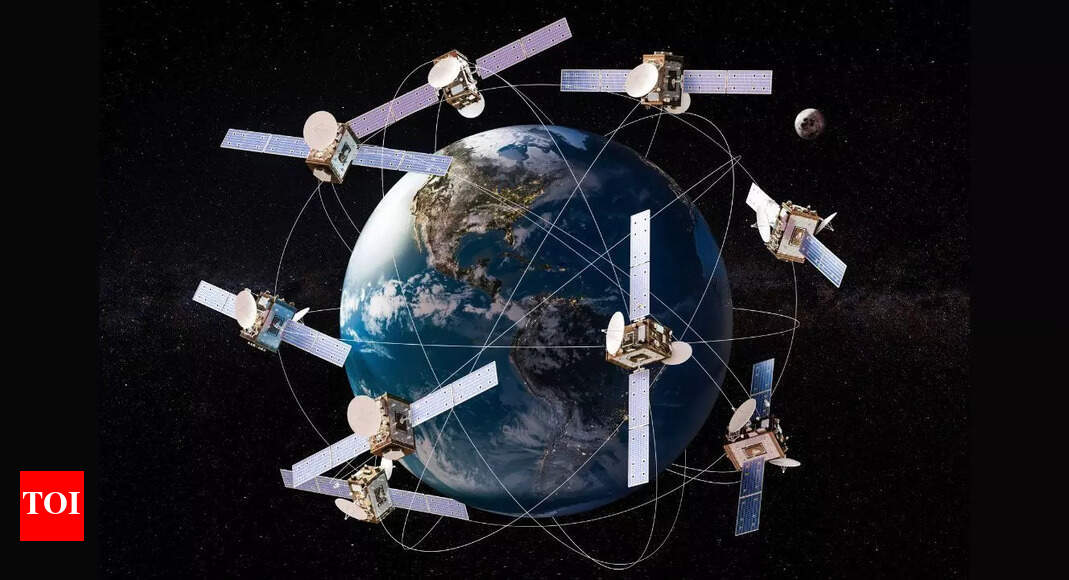
In recent years, the rising congestion in Earth’s orbit has become one of the most pressing challenges facing space-faring nations. Thousands of inactive satellites, rocket fragments, and collision-generated particles now orbit the planet at high velocity, posing significant risks to operational spacecraft and the infrastructure that supports communications, navigation, and climate observation. With the global space economy projected to exceed one trillion dollars by 2040, the sustainability of orbital operations has shifted from a technical problem to a strategic priority. NASA’s latest research reframes this issue through an economic lens, analyzing how cost-effective measures can both mitigate and manage orbital debris while ensuring a viable long-term space environment.
NASA’s study reveals the true financial cost of space debris
NASA’s Cost and Benefit Analysis of Mitigating, Tracking, and Remediating Orbital Debris, released by its Office of Technology, Policy, and Strategy (OTPS), represents a significant evolution in how the agency approaches space sustainability. Rather than focusing solely on the number of debris objects, the study quantifies the financial risk they pose to active spacecraft. By modeling potential costs over a 30-year horizon, the report estimates the economic consequences of manoeuvres, damage, and mission loss due to debris impacts. This approach enables direct comparison between interventions, such as shielding spacecraft, removing large debris, or tracking smaller fragments, based on their relative cost-effectiveness.According to lead author Jericho Locke, measuring debris risk in monetary terms allows NASA and its partners to prioritize the most efficient mitigation actions. The model integrates both technical and economic parameters, assessing how policy changes and new technologies influence debris evolution. This marks a transition from reactive clean-up to proactive management, aligning with NASA’s Space Sustainability Strategy, which emphasizes prevention, cost-efficiency, and international collaboration in maintaining orbital safety.
Mapping the scale of the problem: From fragments to fiscal impact
The European Space Agency reports that more than 35,000 trackable objects currently orbit Earth, alongside an estimated 130 million smaller fragments under one centimeter that remain unmonitored. Traveling at speeds exceeding 7 kilometers per second, even a paint fleck can inflict damage on satellites, while collisions between larger bodies can generate thousands of new fragments. Such cascading effects, often referred to as the Kessler Syndrome, threaten to multiply debris populations exponentially if left unaddressed.NASA’s analysis redefines how such threats are quantified. Instead of counting debris, it assesses the economic exposure associated with orbital congestion. By simulating how debris environments evolve, the OTPS team compared the value of more than ten different mitigation strategies, including deorbiting defunct spacecraft, increasing tracking capabilities, and developing active removal missions. Their findings suggest that rapid deorbiting of expired satellites may be among the most cost-effective approaches, while certain remediation measures, once thought uneconomical, could provide significant long-term savings by preventing future collisions.This method of framing orbital debris in economic terms not only aids decision-makers but also provides a common language for international stakeholders, bridging technical and policy domains. It allows governments and commercial operators to weigh options objectively, considering both financial investment and sustainability outcomes.
Hidden value in the void: The resource potential of space debris
While NASA’s study centers on economic efficiency and risk reduction, parallel research highlights an additional dimension to the orbital debris debate: resource recovery. A recent study published in Waste Management examined the composition and material value of existing space debris, predicting a tenfold increase in the mass of certain metals, including aluminum and titanium, by 2050. Using NASA’s Orbital Debris Engineering Model (ORDEM 3.2), the researchers simulated mass changes at various altitudes, estimating that debris at the 400 kilometer band could accumulate over 38 million kilograms of aluminum within the next quarter century.This finding reframes orbital waste as both a hazard and a latent resource. With aluminum and titanium already listed as critical materials for aerospace and industrial use, the study proposes a dual strategy: to reduce debris through active removal while harnessing its material potential for in-space recycling and manufacturing. In the future, these metals could be repurposed as propellant feedstock or structural material for satellites, reducing dependence on terrestrial supply chains and launch costs. The integration of such resource-based thinking aligns naturally with NASA’s cost-benefit framework, where economic modeling can determine when recovery operations become financially and environmentally viable.
Towards a sustainable orbit: Integrating economics, engineering, and ecology
The convergence of economic analysis and technological innovation is redefining the discourse on orbital sustainability. NASA’s cost-focused model, combined with material resource assessments from independent scientific studies, underscores that addressing orbital debris requires a systems-level approach encompassing policy, engineering, and environmental stewardship. By quantifying debris risk in financial terms, NASA provides a mechanism to evaluate the real-world value of mitigation and remediation measures. At the same time, recognizing the material wealth embedded in debris could transform it from a liability into a future resource stream.Together, these perspectives illustrate a broader shift within space governance: sustainability is no longer an abstract ethical goal but a measurable and manageable economic reality. As the global reliance on satellite infrastructure deepens, such interdisciplinary frameworks may define how humanity continues to operate responsibly within the shared frontier of near-Earth space.Also Read | NASA’s drastic plan: Nuclear bombs could be used to stop ‘City-Killer’ asteroid headed for the moon
