



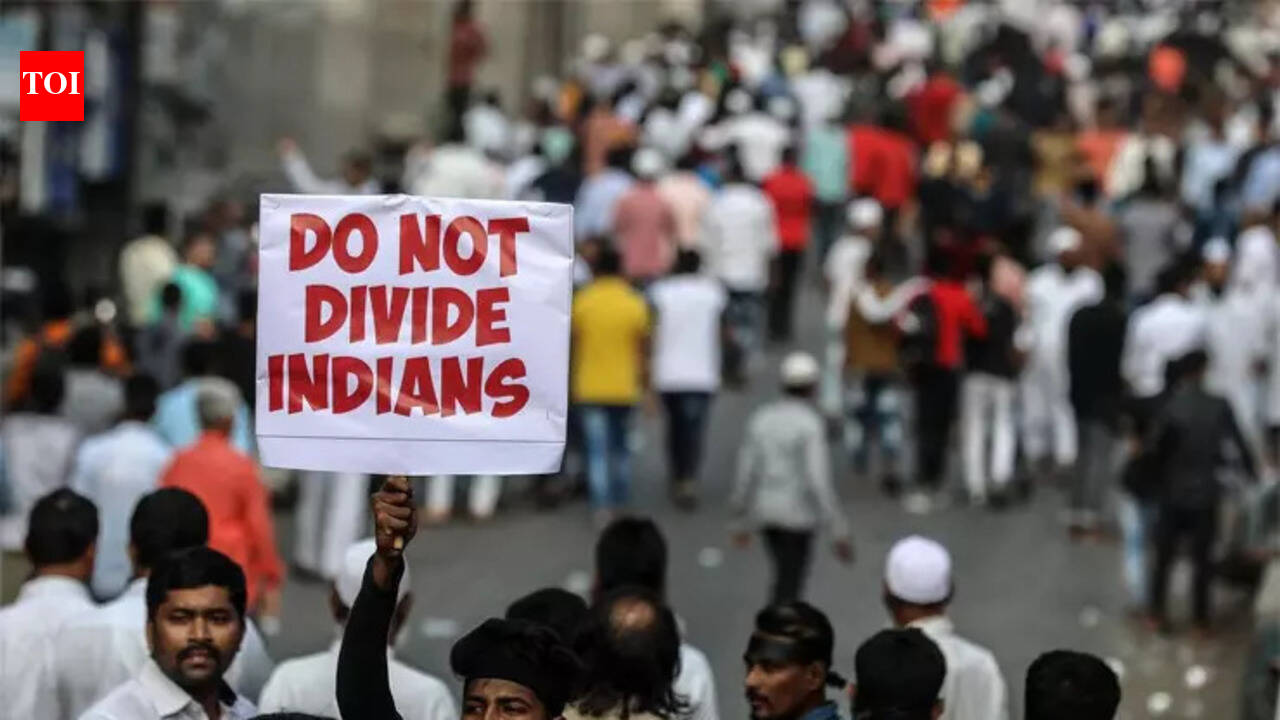
New Delhi: More than six years after its enactment sparked riots in Delhi, the Supreme Court on Thursday scheduled a four-day final hearing from May 5 on 243 petitions challenging the validity of Citizenship (Amendment) Act that provides a pathway for citizenship to Hindus, Sikhs, Jains, Parsis and Christians who may reach India after fleeing religious persecution in Pakistan, Bangladesh and Afghanistan.A bench of CJI Surya Kant and Justices Joymalya Bagchi and Vipul M Pancholi said the petitioners, that include Muslim organizations among which Indian Union of Muslim League has been termed the lead petitioner, and functionaries from Congress, TMC and AIMIM, would conclude their arguments within one and half days and the Center would respond in a similar time frame. May 12 has been kept for rejoinders to be filed by petitioners.On Dec 18, 2019, a three-judge bench, which included Justice Kant, had issued notice to the Center on the petitions challenging CAA on the ground of discrimination against Muslims who came to India from neighboring countries but were not entitled to citizenship under CAA.Protesters, mainly Muslim women supported by political parties, had blocked a major arterial road in Shaheen Bagh here from Dec 15, 2019 till March 24, 2020. Blockades were organized in other parts of the city too. The resultant tension triggered riots in northeast Delhi on Feb 23, 2020 that lasted several days and left 53 dead.SC had last heard the petitions on March 19, 2024, the year the Center framed Citizenship (Amendment) Rules. The Center had filed its response to the petitions in Oct 2022 and termed CAA a benign piece of legislation providing Indian citizenship to members of those communities who have been persecuted for the last 70 years in the three neighboring Islamic countries of Pakistan, Bangladesh and Afghanistan.Countering the plea that CAA discriminated against Muslims, the Center had said, “CAA does not seek to recognize or seek to provide answers to all or any kind of purported persecution that may be taking place across the world or that may have taken place previously anywhere in the world.”On Thursday, the bench agreed with solicitor general Tushar Mehta that the challenge to CAA in relation to Assam and Tripura, where separate accords set deadlines for entry of migrants from Bangladesh, could be de-linked from the ones which have questioned the law from a pan-India perspective.
