



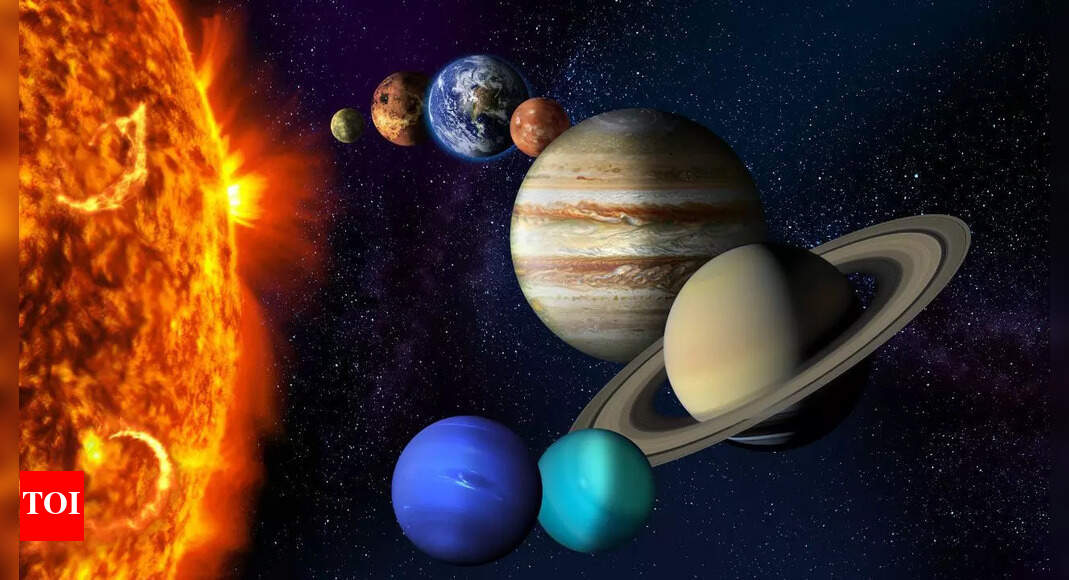

The Sun has been busy again, and this time, its outburst struck Venus first. A powerful solar storm recently slammed into the planet, shaking its thin atmosphere and sending ripples through space. While Earth escaped the direct hit, experts say it’s a sign of what might soon head our way. The event shows just how unpredictable and far-reaching solar activity has become as our star nears its next peak in energy.Unlike Earth, Venus doesn’t have a magnetic field to protect it. So, when a massive coronal mass ejection (CME) from the Sun surged outward, Venus took the full impact. The blast stripped away parts of its upper atmosphere, a reminder of how intense solar storms can be. As EarthSky reported, scientists are watching these events closely, knowing that the same stormy behavior could soon affect our planet too.
What happens when solar storms hit planets
Solar storms begin with powerful eruptions on the Sun’s surface, either as flares or CMEs. These are explosions of light and plasma that hurl charged particles across the solar system. When these particles reach planets, they interact with their magnetic fields and atmospheres.Venus, with its dense carbon dioxide atmosphere but no global magnetic shield, reacts differently to such storms than Earth. When the recent solar storm struck, the planet’s upper atmosphere heated and expanded, allowing solar winds to strip gas particles away into space. NASA’s Parker Solar Probe, which happened to be nearby, captured data from this event, a rare look at how Venus responds when the Sun lashes out.On Earth, we’re protected by a strong magnetic field that deflects most of the solar particles. But even with that protection, a direct CME impact can still cause geomagnetic storms. These storms can disrupt power grids, damage satellites, and disturb GPS and radio signals. The same energy that paints our skies with auroras also tests the limits of our technology.
Venus solar blast warns of bigger storms coming to Earth
The solar blast that hit Venus wasn’t just a random flare-up. It’s part of a pattern showing that the Sun is entering a more active phase known as the “solar maximum.” This cycle, which happens roughly every 11 years, brings more frequent and stronger solar eruptions. According to scientists quoted by EarthSky, the recent activity around Venus hints at the growing intensity of what’s still to come.Venus, in this sense, acts like a mirror. Because it’s closer to the Sun, it often experiences solar events before Earth does. The planet’s reaction to this latest storm, including how much of its atmosphere was affected, gives researchers an idea of what similar events might mean for us. If a comparable CME were to hit Earth head-on, the effects could range from stunning auroras seen far from the poles to temporary power and communication disruptions.What makes this especially interesting is how close the Parker Solar Probe was to Venus when the event happened. Its instruments picked up valuable information about the intensity of the blast and how fast solar particles were moving. That data is now being used to model how Earth’s magnetic field might react under similar conditions.
Earth on alert: solar maximum may cause more frequent auroras and blackouts
Scientists have been warning that as the solar maximum approaches, the number of strong flares and CMEs will rise. The storm that battered Venus is part of a trend showing that the Sun is already becoming more unpredictable.For Earth, that could mean more frequent auroras, but also more strain on satellites and power systems. When high-energy solar particles collide with Earth’s magnetic field, they create electric currents that can interfere with long-distance communication lines and even cause transformer failures.A storm strong enough could also affect astronauts in orbit, exposing them to higher radiation levels. That’s why space weather forecasts are taken so seriously. Agencies around the world, including NASA and the European Space Agency, monitor solar activity daily, sharing alerts if a CME is likely to hit Earth.While most storms are harmless, history shows they can occasionally be powerful. In 1989, a major geomagnetic storm caused a blackout in Quebec, leaving millions without power. The most extreme event on record, the Carrington Event of 1859, disrupted telegraph systems worldwide. If something like that happened today, with our heavy reliance on digital technology, the consequences would be far greater.
Watching the skies and learning from Venus
The Venus impact is a reminder of just how connected the planets in our solar system are to the Sun’s moods. Each eruption offers scientists a chance to learn more about how solar energy travels through space and how it affects planetary environments differently.On Venus, where there’s no magnetic field, the results are harsh atmospheric loss and intense radiation exposure. On Earth, we’re shielded, but not completely safe. Researchers are using the data from Venus and the Parker Solar Probe to refine space weather forecasts, hoping to give us more warning before the next big solar storm.At the same time, there’s wonder in this danger. The same activity that threatens satellites and communication lines also creates auroras, bright curtains of green and red light that stretch across the night sky. In recent months, people in places far from the poles have witnessed these displays, a rare gift from a turbulent star.As solar activity continues to build, scientists expect more such events in the coming year. Venus may have felt the brunt of this latest blast, but Earth is next in line. Whether it’s breathtaking auroras or temporary power disruptions, our planet will soon feel the Sun’s growing restlessness too.
