



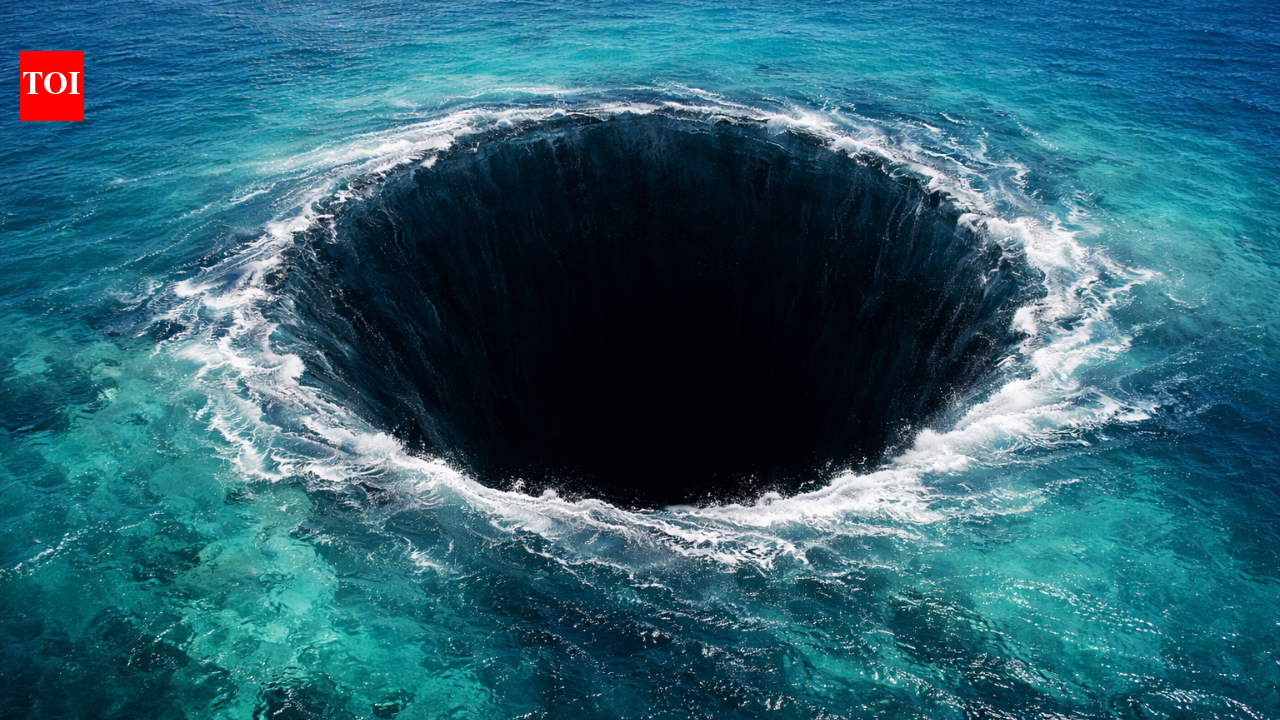
Deep in the South China Sea, scientists from Chinese marine research institutes, including the First Institute of Oceanography, have been exploring a vast underwater sinkhole known as the “Dragon Hole”, and what they found inside is as eerie as it is fascinating. The sinkhole drops nearly 1,000 feet straight down into a dark, oxygen-starved world where most marine life cannot survive. Yet researchers say this extreme environment is anything but empty. Studies of the blue hole’s layered waters have revealed dense microbial communities and, more strikingly, around 1,700 viral types detected through DNA sequencing, many of which remain unclassified in current databases. The discovery is offering new clues about how life and viruses operate in Earth’s harshest hidden ecosystems.
What is the Dragon Hole and where is it located?
The Dragon Hole is the popular name for the Sansha Yongle Blue Hole, a massive marine sinkhole in the South China Sea. Blue holes are steep-sided underwater cavities, often formed in limestone landscapes, that later flooded as sea levels rose.The site drew wide attention in the mid-2010s and has since been mapped and studied in detail by researchers, revealing an environment unlike most of the surrounding ocean.
Why this sinkhole behaves like a sealed world
Unlike normal ocean waters that constantly mix due to currents, wind, and temperature shifts, the Dragon Hole has a structure that limits circulation. Its steep walls and narrow opening reduce the exchange between surface waters and deeper layers.This creates strong layering inside the sinkhole, almost like stacked “zones” with different chemistry. Once oxygen stops being replenished, deep water becomes a trapped environment where unusual microbial life can persist for long periods.In the upper section, conditions are closer to normal marine environments. But below a certain depth, oxygen levels drop sharply and eventually vanish.Once the water becomes anoxic, meaning oxygen-free, many familiar ocean organisms cannot survive. That is why the deep layers appear almost lifeless at first glance. However, what replaces fish and plants is a thriving hidden world of microorganisms that do not rely on oxygen or sunlight.
Life without sunlight: the microbes that rule the deep
In extreme environments like this, microbes survive using chemical reactions rather than photosynthesis. Scientists have identified communities of bacteria that can generate energy from sulfur and other compounds found in the deep-water chemistry of the hole.These microbes are specially adapted to harsh conditions, and different bacterial groups dominate at different depths depending on what chemicals are available. In some layers, sulfur-based metabolism appears to drive much of the ecosystem.
The shocking part: around 1,700 viral types detected through sequencing
The headline-grabbing finding is that researchers detected around 1,700 distinct viral types or sequences in samples from the blue hole using genetic analysis. Many of these appear to be bacteriophages, viruses that infect bacteria.In most ecosystems, viruses are a major force shaping microbial life, and in a place like the Dragon Hole, they may be even more influential. Scientists say viral diversity also appears to shift with depth, meaning the deeper, oxygen-free layers may host a different viral mix compared with the upper zones.
Why many of these viruses are still “unclassified”
A key reason this discovery is drawing attention is that a significant portion of the detected viral sequences cannot yet be confidently matched to known virus groups.That does not automatically mean they are dangerous or entirely new, but it does suggest they are poorly studied or not well represented in existing reference databases, highlighting how much viral diversity remains undocumented in extreme marine environments.
What viruses actually do in a place like this
Viruses are not just passive passengers in ecosystems. In microbial environments, they can:
- control bacterial populations by infecting and killing hosts
- influence microbial evolution by transferring genes
- reshape nutrient cycles by breaking down cells and releasing organic matter
In an oxygen-free sinkhole, these viral interactions could play a major role in determining which microbes survive and how chemical processes unfold over time.
Why this discovery matters beyond the South China Sea
The Dragon Hole is more than a scientific curiosity. It offers a natural testing ground for studying life under extreme conditions, with wider relevance for:
- understanding early life on earth
- learning more about oxygen-free marine zones
- tracking how microbial ecosystems respond to changing ocean chemistry
- exploring what kinds of life could exist in similar environments elsewhere
Because conditions like these are difficult to replicate in laboratories, sites like the Dragon Hole provide rare real-world windows into hidden ecosystems.
What comes next for Dragon Hole research
The detection of such high viral diversity raises major new questions. Researchers will likely focus next on identifying which microbes these viruses infect, how viral activity shifts between layers, and what this means for long-term ecosystem stability.The deeper scientists look into the Dragon Hole, the clearer it becomes that the ocean still holds biological worlds that challenge what we think life should look like.
