



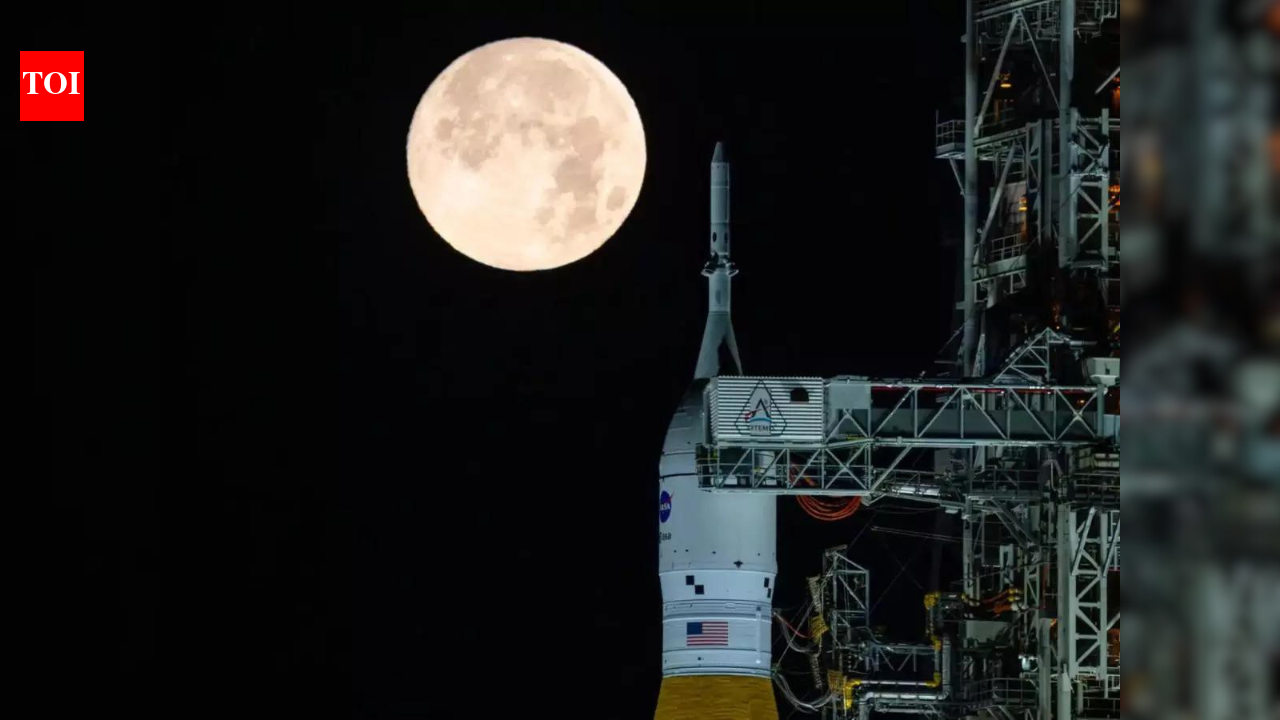
Nasa is preparing to roll back the Artemis II rocket to the Vehicle Assembly Building (VAB) at Kennedy Space Center Nasa administrator Jared Isaacman said. This comes after engineers detected an interruption in helium flow within the Space Launch System’s (SLS) Interim Cryogenic Propulsion Stage (ICPS).The fault detected would almost certainly rule out the March launch window. Announcing the postponement of plan onThe issue emerged during routine operations on Tuesday evening, prompting troubleshooting efforts and a decision to begin rollback preparations while a more detailed assessment is conducted.In an update, Nasa said teams were unable to establish helium flow through the vehicle during a standard repressurisation procedure. The Artemis II rocket has since been placed in a safe configuration, with the engines now being purged using the ground-based environmental control system rather than the onboard helium supply.On Saturday, Nasa had announced the pending completion of Artemis II and had said that the project was set for March 6 before the glitch stalled the mission.It said, “We are targeting no earlier than March 6 for the launch of Artemis II, pending completion of required work at the launch pad and analysis of test data. The Artemis astronauts have entered quarantine to remain in good health before the mission.
What is ICPS?
The ICPS helium bottles play a critical role in purging the engines and pressurizing the liquid hydrogen (LH2) and liquid oxygen (LOX) tanks. Nasa confirmed that these systems functioned correctly during previous Wet Dress Rehearsals (WDR1 and WDR2), but the latest attempt revealed a failure signature similar to one observed during Artemis I.
Engineers probe possible causes
Engineers are now investigating several potential causes. These include a possible issue with the final filter between the ground systems and the flight vehicle, located on the umbilical — though this is considered less likely based on current data. Other possibilities include a malfunction in the quick-disconnect (QD) umbilical interface, which has been observed before, or a failed onboard check valve, which would mirror the fault seen on Artemis I. NASA had implemented corrective measures following that mission to prevent a recurrence.Regardless of the root cause, agency officials said access and remediation can only be carried out inside the VAB, necessitating the rollback. A more extensive technical briefing outlining the path forward for Artemis II and subsequent missions is expected later this week.
Setback revives Apollo-era parallels
The setback has disappointed space enthusiasts and agency staff alike. NASA acknowledged that expectations are high given the program’s cost and timeline, but emphasized that setbacks are not uncommon in complex spaceflight operations. The agency drew parallels with the Apollo era, noting that Neil Armstrong’s Gemini 8 mission ended prematurely after less than 11 hours in space due to a technical fault, just three years before he became the first person to walk on the Moon.Artemis II is intended to be the first crewed mission of Nasa’s Artemis programme, which aims to return astronauts to the lunar surface and establish a sustained human presence. Officials reiterated that while initial flight rates and architecture may evolve, the long-term ambition remains to build a lunar base and conduct continuous missions to and from the Moon.Nasa said further updates will be provided as engineers complete their assessment and define the recovery timeline.
