



As NASA plans for long-term human missions beyond Earth, one question keeps resurfacing: how do you sustain life in places where resupply from Earth is slow, expensive, and limited? Machines and technology will play a significant role, but scientists are increasingly turning to biology for answers. In recent research, insects have emerged as unlikely but promising allies for future lunar and Martian habitats. These small creatures already support ecosystems on Earth by pollinating plants, recycling waste, and maintaining soil health. Researchers believe the same traits could be adapted for use in controlled environments off-world. What was once limited to space experiments may soon become part of the foundation for human survival beyond our planet.
Insects and NASA’s long history of space research
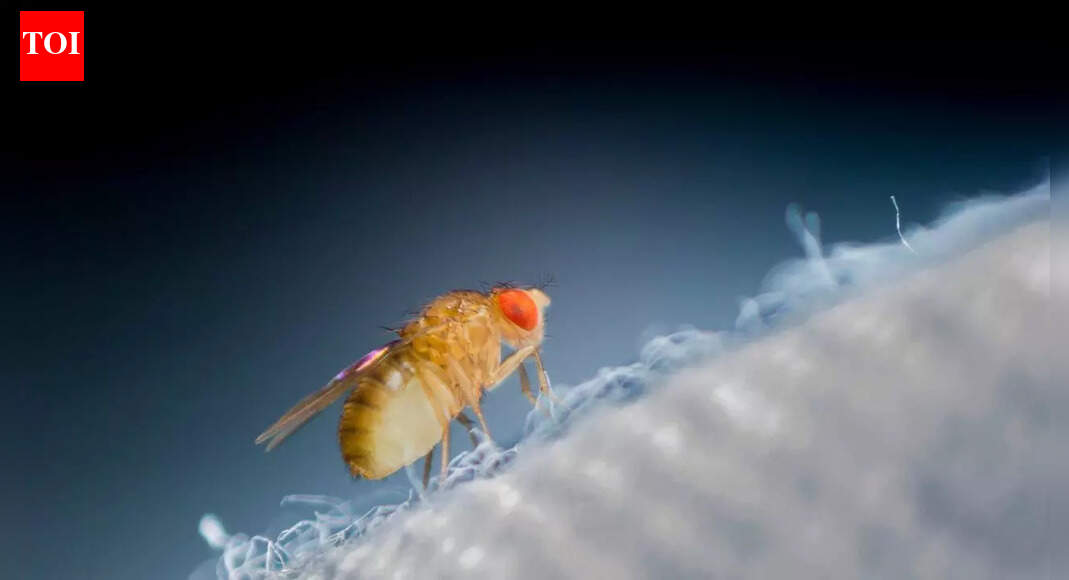
For many years, insects have been the silent partners of human space exploration. The first animals thatNASA sent to space were fruit flies in 1947, selected because of their short life cycles and genetic similarities to humans. As a result, these organisms have been used to study the effects of radiation, immune response, and growth in space. Insects such as ants and butterfly larvae have also been sent on the missions, mostly for observation.Insects on the International Space Station, nevertheless, cannot operate as they do on Earth. Their movement and orientation are affected by microgravity, which makes it impossible for them to carry out their natural functions, such as pollination or soil maintenance.
Why the Moon and Mars change the equation
The Moon and Mars offer something the space station does not: gravity. Although much weaker than Earth’s, scientists believe it may be enough for insects to walk, fly, feed, and reproduce more naturally. This opens the door to using insects as active participants in off-world ecosystems rather than passive research subjects.NASA researchers suggest that even limited gravity could allow insects to regain coordination, making them useful for agriculture, waste processing, and environmental balance inside sealed habitats.
Solving the challenge of space farming
Producing food is a major challenge for any plan of living long-term beyond our planet. It is generally assumed that first space greenhouses will be able to produce rapidly maturing crops such as tomatoes, peppers, strawberries, and leafy greens. Nevertheless, pollination remains an issue. In a growing habitat range, pollinating plants is a very slow process and, hence, infeasible.Bumblebees may be a source of help. As they are already used in closed greenhouses on Earth and are very effective pollinators, under strictly controlled temperature, light, humidity, and airflow conditions, small colonies could be the ones that ensure crop yields on the Moon or Mars.
Turning waste into valuable resources
Waste management is another area where insects could prove essential. Black soldier fly larvae are known for their ability to break down organic waste quickly. In doing so, they produce nutrient-rich material that can be used as fertiliser, along with protein-rich biomass.Mealworms offer similar benefits. They can process fibrous plant waste and may also serve as a supplementary protein source for astronauts, reducing dependence on supplies shipped from Earth.
Keeping alien soil healthy
Healthy soil is more than just minerals. It relies on microorganisms and tiny animals to maintain structure and balance. Insects such as springtails and mites play this role on Earth by supporting microbial health and preventing soil degradation.In space habitats, these organisms would be kept in sealed ecological systems designed to prevent contamination while supporting plant growth. Even small soil ecosystems could make a significant difference to long-term farming success.
Moving towards closed-loop life systems
NASA is moving toward systems that are more sustainable and self-sufficient, such as closed-loop ecosystems. It is a system in which the waste produced by one process is converted into the input of another. Insects are perfect for this system. They digest nutrients effectively, and there is less requirement for complicated machines.Next-generation habitats will not be dependent on technology alone to solve problems but will be similar to Earth’s natural cycles in that they will use living organisms to keep the equilibrium.
Small creatures with a big role in space exploration
The idea that insects could help humans survive on the Moon or Mars challenges traditional views of space technology. Yet for hundreds of millions of years, insects have quietly supported life on Earth. Now, they may help humanity extend that life beyond it.
